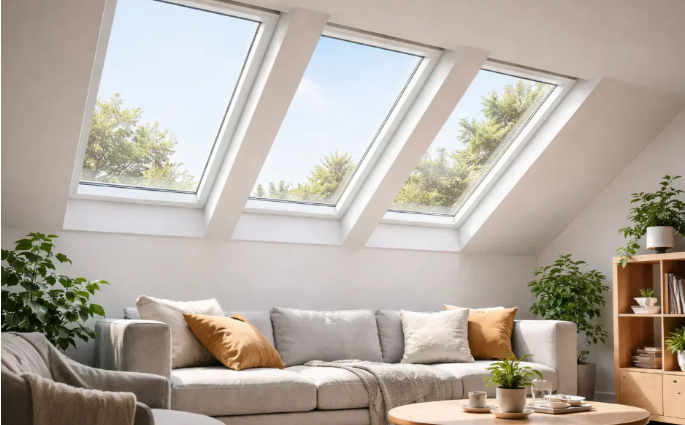
Renovation expenditures get spent in predictable places – kitchens, baths, flooring. Natural light seldom makes the priority list, however it is the single aspect that impacts how every other remodelling option looks and feels. Homeowners who buy skylights early in the design phase frequently remark that it reframes how they think about every other area in the home. The problem is not that homeowners do not value natural light. It is because they misjudge how much the wrong skylight option — wrong position, wrong glass, wrong kind — may underperform or actively cause difficulties. Understanding what distinguishes a truly good installation from a bad one is vital understanding before any money is paid.
The Orientation Mistake Most People Make
Here is something skylight suppliers rarely volunteer upfront. In Australia, a north-facing skylight delivers soft, consistent light across most of the day without the heat spike that other orientations create. West-facing skylights, by contrast, catch the harshest afternoon sun — and in a bedroom or living room, that means a space that becomes genuinely uncomfortable on summer afternoons regardless of how good the glazing specification is. The roof pitch compounds this further. A low-pitched roof with a west-facing skylight on a shallow angle traps radiant heat differently to a steeply pitched equivalent. These variables interact, and getting the orientation decision wrong is not correctable after installation without significant disruption.
What Low-E Glazing Actually Does
Low-emissivity coatings on skylight glazing are frequently mentioned in product literature without any explanation of what they practically deliver. The coating works by reflecting long-wave infrared radiation — heat — back in the direction it came from. In summer, that means solar heat is largely reflected before it enters the room. In winter, internal warmth is reflected back down rather than escaping through the glass. The result is a skylight that performs across seasons rather than one that works beautifully in winter and turns a room into a greenhouse by February. When homeowners buy skylights without checking whether low-E glazing is standard or an optional upgrade, they sometimes discover the difference only after the first summer with the product installed.
Vented Skylights and Stack Effect
Hot air rises — this is not news. What is less commonly understood is how deliberately using that physics through a vented skylight changes thermal comfort in a way that air conditioning alone cannot replicate. Opening a vented skylight at the top of a room creates a stack effect: cooler air enters from lower openings, warm air exits through the roof. In a kitchen, this clears cooking heat and moisture faster than an extractor fan. In a bathroom, it eliminates condensation that damages paint and grout over time. The decision to buy skylights with a venting function rather than fixed units is not about luxury — it is about whether the space they serve will actually function well across the year.
The Flat Roof Problem Nobody Warns You About
Flat roof skylight installations fail more frequently than pitched roof installations, and the reason is almost always the upstand detail — the raised frame section that sits between the roof surface and the skylight unit itself. When upstands are undersized or the waterproofing membrane is not dressed correctly into the frame, water finds its way in. Not immediately, typically. Usually after the first significant rainfall event following the warranty period. The structural damage that follows — to ceiling materials, insulation, and in some cases to framing timbers — consistently exceeds whatever was saved by using a cheaper installer or product. Flat roof skylight installation requires a roofer with specific waterproofing experience, not simply a general builder who has fitted skylights on pitched roofs before.
Tunnel Skylights for Rooms Without Roof Access
Internal rooms — hallways, windowless bathrooms, ground-floor spaces beneath an occupied upper storey — are typically written off as permanently dark. Tubular or tunnel skylights challenge that assumption. They use a highly reflective tube to channel daylight from a small roof dome down into a ceiling diffuser, covering distances of several metres without requiring structural alterations. The light quality is different to a direct overhead skylight but substantially better than artificial alternatives. For renovation projects where opening the roof structure is not feasible, tunnel skylights solve a problem that most homeowners assume is unsolvable.
Conclusion
The decision to buy skylights is straightforward; making the right skylight decision takes more thought than most renovation guides suggest. Orientation, glazing performance, ventilation function, and installation quality each determine whether a skylight genuinely improves a home or creates a seasonal problem. The products that perform well over decades are not necessarily the most expensive — they are the ones chosen with a clear understanding of how the specific room, roof type, and climate interact. That understanding is worth developing before the builder is booked, not after.